This post may contain affiliate links, which means I may earn a small commission if you buy through them — at no extra cost to you. I haven’t personally tested every product mentioned; recommendations are based on side-by-side spec comparisons and hundreds of parent reviews. Read the full affiliate disclosure.
It’s 7am. The thermometer says 43°. The forecast says 64° by pickup. Your kid is standing at the door in the coat that was exactly right in January, and you already know how this ends: sweaty by 10, coat tied around a waist by noon, coat left on a playground fence by 3.
Welcome to in-between weather — the 40–65° stretch that makes up basically all of fall and spring (hello, Midwest, where we get all of it before lunch). The fix isn’t a warmer coat. It’s layers that come off.
The short version
Dress them for the warm part of the day, then add removable layers for the cold part. A regular shirt + a fleece or quarter-zip they can take off themselves + a light shell in the backpack beats one big coat every single time. If they can’t raise their arms over their head, it’s too much.
The one rule that fixes everything
Dress for the afternoon. Carry the morning.
A big coat solves 7am and ruins the other eight hours. Light layers solve the whole day — warm at drop-off, peeled down by recess, and nothing left behind because the layers are small enough to stuff in a backpack. That’s the entire philosophy. Everything below is just the details.
The 3-piece system (plain-English version)
1. A shirt they’d wear anyway. Long-sleeve tee or regular tee depending on the day. This is the layer that’s still on at 2pm.
2. A warm middle they can rip off themselves. Lightweight fleece, quarter-zip, or a vest. Zippers beat pullovers here — a 3-year-old (or a busy teacher) can undo a zipper without a wrestling match. [Affiliate product placement: lightweight fleece / quarter-zip]
3. A shell that lives in the bag. A packable wind/rain layer for the surprise gust or drizzle. It weighs nothing and saves the day about once a week in spring. [Affiliate product placement: packable rain shell]
Notice what’s not in the system: the giant winter coat. It fails all three jobs — too hot to keep on, too bulky to play in, too big to stash.
The temperature cheat sheet
01
60–65°: Barely a jacket day
Long-sleeve tee (or a regular tee for your personal furnace child) + one light throw-on layer for the morning, if that. Most kids will be fine without one by 10am — the layer’s real job is to stop the drop-off argument.
02
50–60°: The fleece zone
Long-sleeve base + lightweight fleece, quarter-zip, or vest. A vest is sneaky-great here: warm core, free arms, zero “I can’t move” complaints. Shell goes in the backpack if wind or rain is possible. [Affiliate product placement: vest]
03
40–50°: Real layers, still no parka
Long-sleeve base + fleece + a light jacket or lightweight insulated layer on top. Add a beanie for the morning and thin gloves if your kid runs cold — both fit in a coat pocket by noon. This is as cold as it gets before the actual winter system takes over. [Affiliate product placement: lightweight insulated jacket]
📷 Photo spot: the three layers laid flat next to each other — shirt, fleece, packed shell
What about wind and rain?
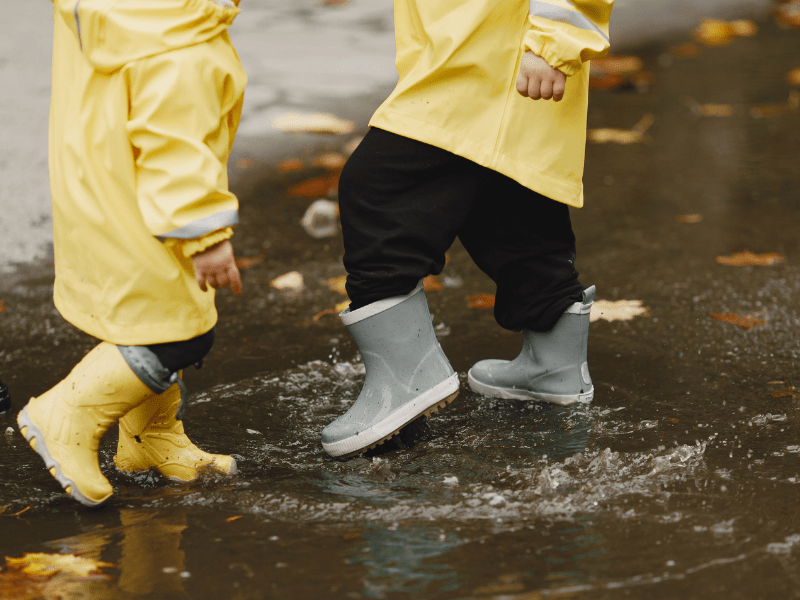
Wind is the sneaky one — 55° and sunny feels great until a gust turns it into 45°. That’s the shell’s whole job: it blocks wind and light rain without adding real warmth, so it works across the entire 40–65° range. For proper mud-and-puddle days, that’s a different sport — that’s what a rain suit is for.
Feet: the “not sandals, not snow boots” season
In-between weather is waterproof-sneaker season: warm enough for regular play, sealed enough for dewy grass and the puddle they absolutely will find. [Affiliate product placement: waterproof sneaker] On genuinely wet days, go straight to rain boots and save yourself a sock change.
The “can they move?” test
Before anyone leaves the house: arms over the head, one full squat, a three-second sprint down the hallway. If any of those fail, remove a layer or size up. A slightly chilly kid who’s running warms up in two minutes. A kid who can’t bend their arms just stands there — cold and mad.
What to skip
The heavy parka in October. It’s a January tool. Cotton hoodies for wet play. Cotton soaks and stays soaked — fine for dry days, miserable in drizzle. Anything they can’t unzip themselves. If it requires an adult to remove, it will simply stay on and become a sweat suit.
Quick answers
What should kids wear in 40 degree weather? Base layer + fleece + light jacket, plus a beanie for the morning. Skip the full winter coat unless they’ll be standing still outside for a long time.
What should kids wear in 50 degree weather? Long-sleeve shirt + a fleece or quarter-zip. Add a vest or light shell if it’s windy. This is the classic two-layer day.
What should kids wear in 60 degree weather? A long-sleeve tee, maybe a light layer for the first hour. Most kids don’t need a jacket at 60° once they’re moving.
Do kids need a coat in 60 degree weather? Usually not — a light layer they can remove is plenty. Watch the wind, not just the number.
Dress for the afternoon. Carry the morning.
When the 40s become the 20s
At some point the light-layer game ends and real winter starts. When that first hard-freeze morning hits, the Toddler Winter Gear Checklist picks up exactly where this guide leaves off — what they actually need, what to skip, and how to keep them warm without the marshmallow effect.